
The 'Super' number on a suit fabric label (such as Super 100s or Super 150s) refers to the fineness of the wool fibre, not the weight of the cloth, though finer Super numbers are generally used to weave lighter-weight fabrics.
Choosing a suit fabric means balancing three separate things: the wool's fineness (its Super number), the cloth's weight in grams per metre (gsm), and how that combination performs in real life — durability, drape, breathability, and season. This guide breaks down what Super 100s to Super 150s actually mean and which weight suits your climate and use case.
What Does 'Super 100s–150s' Actually Mean?
The Super number refers to the diameter of the wool fibre used to spin the yarn, measured in microns — the higher the number, the finer the fibre. Super 100s wool is coarser and more durable, while Super 150s wool is finer, softer to the touch, and drapes more fluidly.
A higher Super number does not automatically mean a better suit. Finer fibres are more delicate, so Super 140s and 150s fabrics generally need more careful handling and are better suited to occasional wear than everyday use. Super 100s to 120s fabrics are the workhorses of made-to-measure tailoring: they hold a crease well, resist wrinkling, and stand up to regular wear.
Fabric Weight (gsm) vs. Super Number: Why Both Matter
Fabric weight is usually expressed in grams per square metre (gsm) or ounces, and it's a separate spec from the Super number. Two fabrics can both be Super 120s but have very different weights depending on how densely they're woven — one might be a lightweight 260gsm, ideal for warm weather, while another is a heavier 330gsm suited to colder months.
As a general guide: fabrics under around 280gsm are considered lightweight and breathable, suited to spring, summer, or warm-climate wear; fabrics in the 280–340gsm range are mid-weight, four-season options that work well for most UK conditions; and fabrics above 340gsm are heavier, warmer cloths best reserved for autumn and winter. When choosing a suit, ask about both the Super number and the gsm — the combination tells the full story.
Super 100s–120s: The Everyday Choice
Super 100s to 120s wool strikes the best balance of durability, value, and comfort for suits worn regularly — for work, travel, or frequent formal occasions. The slightly coarser fibre holds its shape well, resists creasing, and tolerates the wear and tear of daily use better than finer counterparts.
This range is a practical starting point for anyone building a first bespoke or made-to-measure suit, especially if it needs to work hard across many wears per year.
Super 130s–150s: Luxury Drape for Special Occasions
Super 130s to 150s wool is prized for its exceptionally soft handle and fluid drape — it moves and falls in a way coarser wool cannot replicate, giving the suit a noticeably more luxurious feel. This makes it a popular choice for weddings, black-tie events, and suits intended to be worn less frequently.
The trade-off is durability: finer fibres are more prone to shine, wear, and abrasion over time, so Super 140s and 150s suits are generally better suited to occasional wear and careful storage rather than being a daily work suit.
Matching Fabric Weight to Season and Climate
Lightweight fabrics (roughly under 280gsm) breathe well and suit warm climates, summer weddings, or destinations like Singapore. Mid-weight fabrics (roughly 280–340gsm) are the most versatile choice for the UK's temperate, changeable climate and work across most of the year. Heavier fabrics (above 340gsm) provide warmth and structure for autumn and winter wear, including tweeds.
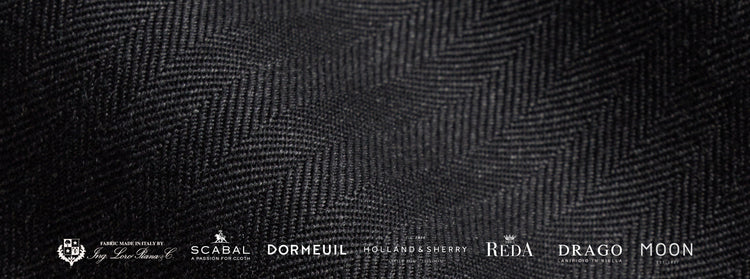
Edit Suits Co. works with recognised fabric houses including Reda, Vitale Barberis Canonico, Drago, Moon & Sons (known for tweed), Alfred Brown, Holland & Sherry, Huddersfield, Hardy Minnis, Dormeuil, Scabal, and Loro Piana. Fabric ranges and specific weights in stock can vary by showroom and season, so it's worth booking an appointment to see current bunches in person.
How Fabric Choice Fits Into Your Suit's Construction
Fabric weight and Super number are only part of the equation — how the jacket is constructed also affects fit, structure, and longevity. Edit Suits Co. builds every suit, including its entry-level option, with half-canvas jacket construction as standard, which allows the canvas layer to shape naturally to the body over time. A half-canvas construction with enhanced lapel roll is available for +£100, and full-canvas construction — offering the most natural drape and long-term shape retention — is available for +£200.
Whichever fabric weight you choose, pairing it with the right canvas construction is what determines how the suit ultimately fits and moves.
Frequently asked questions
Is Super 150s wool better than Super 120s?
Not necessarily — Super 150s wool is finer and has a more luxurious drape, but it's more delicate and less durable than Super 120s. Super 120s is generally the better choice for suits worn regularly, while Super 150s suits occasional-wear garments like formalwear.
What's the difference between Super 100s and Super 150s wool?
The number refers to fibre fineness: Super 100s uses coarser, more durable wool fibres, while Super 150s uses much finer fibres that feel softer and drape more fluidly but wear less robustly over time.
What fabric weight is best for a UK suit worn year-round?
A mid-weight fabric in the roughly 280–340gsm range is generally the most versatile choice for the UK's temperate climate, performing well across most months without being too heavy or too light.
Does a higher Super number mean a heavier fabric?
No — the Super number describes fibre fineness, not fabric weight. Finer fibres are often (but not always) woven into lighter-weight cloths, so it's important to check the gsm separately from the Super number.
Which fabric weight suits a summer wedding?
A lightweight fabric under roughly 280gsm is generally best for summer weddings or warm climates, as it breathes better and feels cooler than heavier cloths.
Does Edit Suits Co. offer different fabric weights across its price points?
Edit Suits Co. suits start from £479 for a 2-piece suit in the UK (from S$749 in Singapore and CHF 749 in Switzerland), with half-canvas construction included as standard at every price point; fabric options and weights can be viewed and discussed in showroom with a tailoring advisor.